Unknown's avatar

About Badge415

I'm a police officer in Southern California and my goal is to show the human side of police work. I've been with my department for 20 years and I feel I have something to offer from my point of view.

Protest away, but you never know when you’re going to need a cop

subway-employee-2

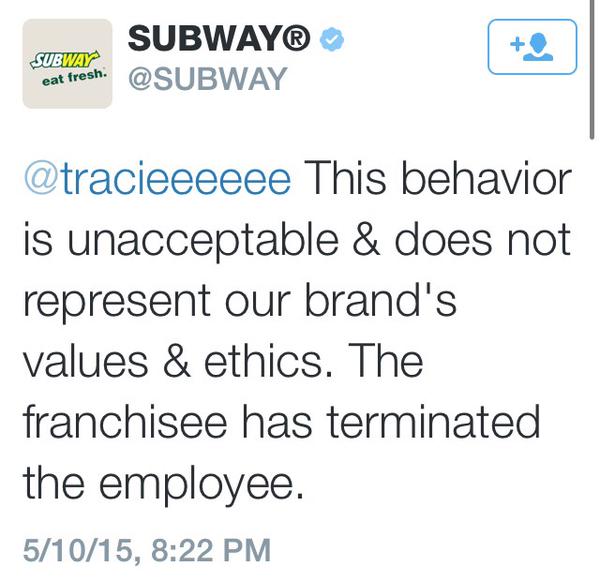
By now most people have heard about the Subway employee and her comments about the two police officers who were killed while on duty in Mississippi.

I was disgusted by this, but not surprised that someone would say something like that. It’s just the way it is in the world we live in.

Her comments were not just about two murdered police officers. They were about all of us and what she thinks of law enforcement in general. That’s fine. She can believe whatever she wants, but who is she going to call when she needs help? Who is she going to call if she’s ever raped? Who is she going to call if one of her children ever got hit by a car?

She’s going to call a police officer.

Three years ago our city experienced civil unrest after a couple of officer involved shootings. There was one particular neighborhood that was a boiling point and officers had to stand by while the district attorney investigators conducted their investigation. The crowd become more violent and additional officers had to be called.  This all occurred before I started my shift.

Eventually more officers were needed at the scene and I was sent. When I arrived, I stood in a line alongside other officers while the crowd was acting crazy. I stood there disgusted with the way some of these people were acting.

There was one particular woman who decided I was going to be her civil unrest project. She was upset about something, but I had no idea because I wasn’t even at work when the mess started.

She stood there and yelled at me. She spit on the ground toward my direction. She went on and on as I seemed to be the only one who drew her rage.

I stood there while she raged her personal little war against me, but her protest, anger and free speech fell on deaf ears because I had no idea what she was saying.  All I could think of was, “Whatever lady.”

I never forgot what that woman looked like because we spent so much quality time together. I even saw her complaining on the news about the police that night.

Fast forward six months and guess who I got to meet again? You got it. My long lost Spanish speaking spitting protester. She called the police because she needed help. How ironic is that?

What a small world. I was the follow up officer and stood by while he handled the call. I listened as a translator told us why the woman needed the police. Of course, it was for something trivial, but that didn’t stop her from calling 911 when she needed a cop.

I put on a professional face and just stood there. There was nothing for me to say. Her protest that day was more about being mad at the uniform than me. But that doesn’t mean I don’t get to have an opinion about her. Let’s just say, “#@##$!,” might be close to what I wanted to say.

I wondered if she recognized me. She gave me a few looks like she did, but it didn’t matter. I just wanted to get done with the call so I could move on to the next one. When it was time to leave, I silently walked  and bit my tongue.

In the end I have a message for people who want to protest.

Protest all you want. On my days off I have better things to do with my time than stand on the sidewalk yelling at people I don’t know. If that’s what you want to do knock yourself out. It’s America.

Just remember this. Who are you going to call the next time you need help? Not the Ghostbusters. You’re going to call a police officer. You have no choice so let’s work together. It’s easier that way.

Is your teen abusing medications to get high?

DXM-ABUSE

Last week I was a witness to the beginning of another tragic story. I was left shaking my head and wondering where this teenager went wrong, or more importantly, where his parents went wrong.

On Saturday night I was dispatched to a traffic collision involving three vehicles. The call information mentioned that one of the drivers was possibly DUI. When I arrived, I saw an officer walking a male from the street to the sidewalk. From a distance I estimated his age to be about 14 years old. I just assumed he was a passenger from one of the vehicles.

I got out of my car and walked over to where they were. That’s when I found out this kid was actually 16 years old and he was the suspected drunk driver.

He rear ended one vehicle and then crashed into another when he tried to back up. He appeared under the influence and was eventually arrested for DUI. Of course, he didn’t have a driver’s license either.

The driver was under the influence of a dissociative anesthetic. Most people don’t even know what that is. A dissociative anesthetic includes PCP, ketamine and Dextromethorphan (DXM). DXM is the active ingredient in cough medicines. It’s also abused because it’s easily accessible.

This kid had been drinking cough medicine and also had four Xanax pills in his pocket from his mother’s prescription. Talk about a train wreck.

About an hour later I did a record check on his name and discovered he was arrested for DUI three months ago. Could his story get any worse?

I walked by a room where he was sitting and asked him what his blood alcohol was when he was arrested. The kid told me .20%.

I shouldn’t be shocked anymore, but every once in a while it still happens. I told him he was on the road to being a statistic and I warned him of the dangerous path he was heading down. He said he understood and seemed to listen to me.

Did I get through to him? Probably not, but at least I tried.

I leave you with this final thought if you’re a parent of a teen. You might want to watch the cough medicine bottle or other prescriptions in your medicine cabinet. You could be running low and didn’t know it.

Most people think it won’t happen to them, but there’s a chance it could. Don’t end up like some of the people we deal with. They don’t know there’s a problem until it’s too late.

Don’t forget the names of those killed while wearing the badge

IMG_0370(1)

I think of my family every time I hear about a police officer being killed in the line of duty. I also think how I hope it never happens to me. I never want my family to be the ones sitting in the front row at the grave site being presented with the American flag by my chief. I never want them to hear the bagpipes being played for me.

Whenever I hear an officer was killed in the line of duty I reflect on some of the close calls I’ve had. I think of a few times when I or someone I knew, could’ve been the next name on the wall in our police department hallway.

Whenever I hear of an officer’s death, I think of how grateful I am for what I have and how I’m still able to do the job I love.

And finally, I also think about two officers who were killed over twenty years ago.

I started the academy on August 29, 1994 and graduated February 22, 1995. During that time there were two officers from the area who were killed in the line of duty. I never forgot their names because I attended their funerals with my academy classmates.

Those two funerals helped shape how I saw things from the time I was a young recruit to now, as a veteran officer with new gray hairs that seem to appear every day.

It was one of the best things the academy staff ever did because it made everything real. This wasn’t classroom stuff. It was up close and personal. It showed just how serious this job really was.

Officer Charles Heim was killed on October 21, 1994. Officer Michael Osorio was killed on October 31, 1994.

Officer Heim was an officer with the Los Angeles Police Department. Officer Osorio was with the La Habra Police Department. They were killed less than two weeks apart and I can still remember seeing their pictures on TV.

Officer Heim was shot by a suspect and Officer Osorio was killed by a drunk driver on Halloween night. Officer Osorio’s department was not far away from mine so it really hit close to home.

I remember standing in the cemetery at Officer Heim’s funeral and being amazed at the sight of all the officers who were there. It showed me I was part of something much bigger than I thought.

When the bagpipes started playing I could sense the emotion around me as people fought back tears. Then the helicopters could be heard in the background. I looked up to the sky as they flew overhead. The rotors were loud and added something to the moment that is hard to describe. Then one helicopter broke off from the group and started flying in a different direction in the “Missing Man” formation. I remember saying to myself, “I never want my family to go through this.”

It was such a powerful moment and it stayed with me for the rest of my life.

Two weeks later I was at another officer’s funeral. I can still remember the heartfelt eulogy that Officer Osorio’s chief gave as I looked across the sea of uniforms that were there to pay their respects. That too, was another moment that stayed with me.

These funerals showed me that nothing can be taken for granted while doing this job. It showed the unspoken bond that officers have because they all potentially share the same fate while wearing the badge.

There’s nothing that compares to a police officer’s funeral. It’s different from any other funeral you’ve ever attended. It’s amazing to see how many officers are there for someone they might not have known.

A regular person sees it as a sad moment. A police officer sees it as a sad moment too, but there’s one big difference.

A police officer knows it could’ve been them. They also know it could’ve been their family sitting up front and being presented with the flag.

The officers in attendance also know this won’t be the last one who dies while wearing the badge. That’s what makes the funeral personal.

That’s also why we can’t forget the names of those who died while in the line of duty.

Be safe.

More About The Body Worn Camera

IMG_0614(1)

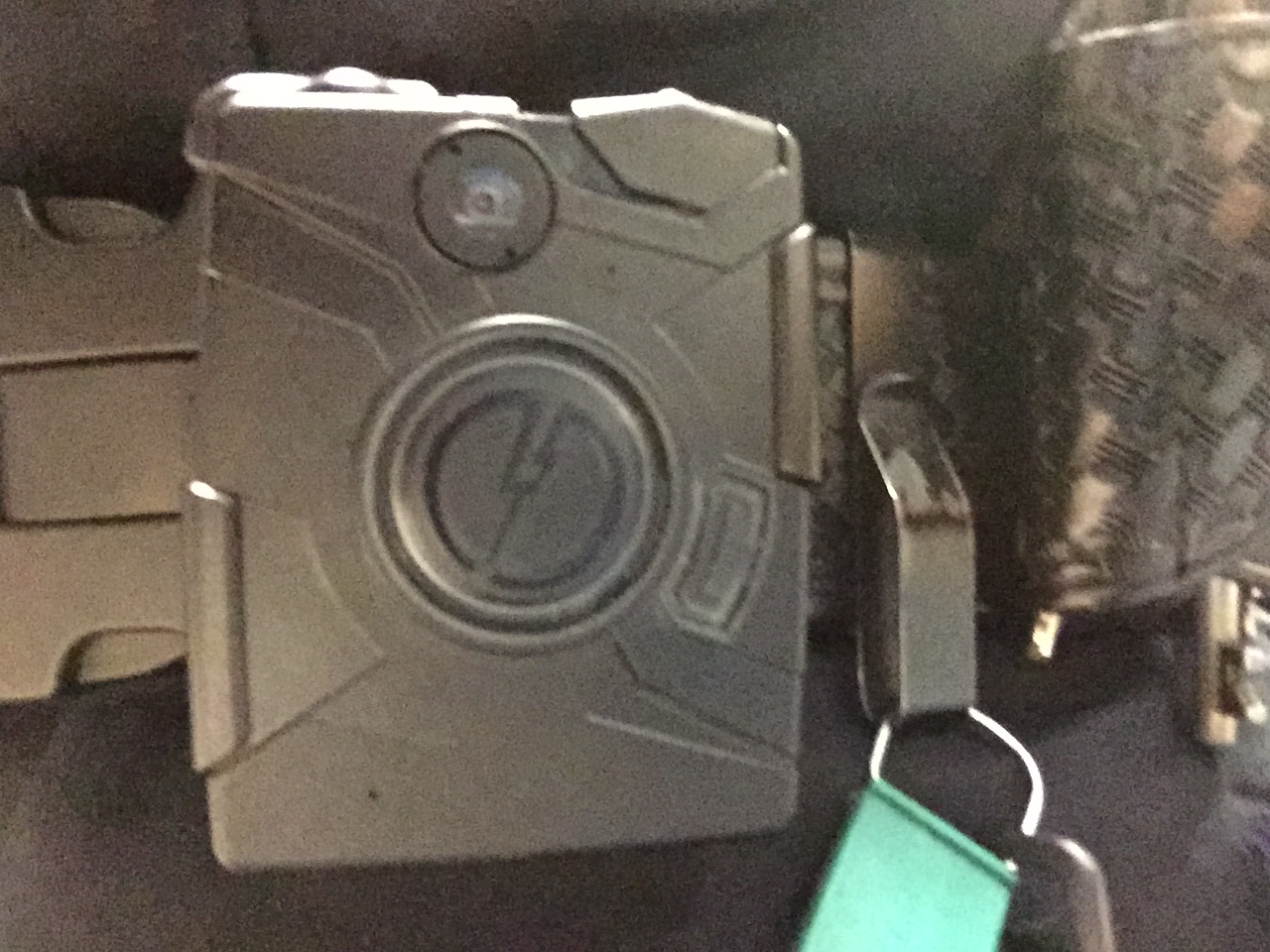
The other night I responded to a neighboring city to contact the suspect in a hit and run collision. An officer from the neighboring department was also there. When I was done with the interview, I walked up to the suspect vehicle so the damage would show up in the video from my body worn camera. It was easy. I didn’t even have to get a regular camera out.

I looked over at the officer from the other department and said, “I love this thing.” With a raised eyebrow he looked at me like I was kidding. That’s when I said, “No, really. This thing is great.” He still looked like he didn’t believe me as he said, “Really?”

I then told him the advantages I have seen in a short time. Another officer from our department also told him the same thing.

He still didn’t look convinced and told me his department was testing them out. He said it would be hard to get used to. I told him it was easier to use than the audio recorder and it showed so much more. He still didn’t seem convinced.

He then said something lame. He said it would be easier for the younger officers to use because they were more technologically savvy. I could tell he was resistant to change.

Lately I’ve been asking random officers at my department what they thought about the BWC. Every person has instantly said they like it. Every one of them has also told me a story where the BWC was better than audio because it showed so much more.

A lot of officers also brought up stories where they wished they had the BWC when someone complained.

One motor officer told me a unique way how he uses his BWC on car stops. While on the stop he’ll hold the license up to the BWC so it will be part of the video in case something happened to him. I never thought of that.

The other night someone showed me a picture they took on their phone of a hit and run license plate. I held the phone up to my BWC so there was proof the witness actually took the pic. This way there was no doubt we had the correct license plate number.

I’m here to say this thing has been great. It’s not perfect, but I’m glad my department spent the money for the BWC sooner, rather than later. It will make our jobs easier in this crazy environment.

There’s nothing like having the video show how some of these people act on calls. It’s unfortunate that it has come to that, but that’s the world we live in.

It cracks me up on calls where people pull out their phones to record us. That’s fine. I’m recording you too.

More importantly, I have more gigabyte space to do it.

Do you know how many people died today in traffic collisions?

_DSC8003

How important is traffic safety to you?

How many people were killed in the time it took you to watch your favorite TV show? Do you know how many people were killed in the time it took you to drive to work, pick up your kids and go to soccer practice?

How important is this subject to you?

Now, try asking how important this subject is to the person who lost their husband, wife, son, daughter, grandmother, grandpa or child in a traffic collision. Try asking someone who has permanent back pain after being involved in a collision.

How important is this subject to them? It’s more important than you know.

32,719 people were killed in traffic collisions in the United States in 2013. That’s an average of 89 people a day. Every day.

That’s almost an average of 4 people an hour.

Ask any officer or firefighter who has been to a fatal collision. They’ll tell you how it didn’t have to happen. They’ll also tell you how many times they’ve seen carelessness take a life away.

The most painful sound to hear is a family screaming and crying after being told that their loved one was killed in a car accident. It’s the type of sound that stays with you. It’s the type of sound that hurts to listen to it.

You can feel if vibrating through your bones as each cry seems to pass through you like a cold wind on a winter day. It bites and cuts through you. It makes you shiver.

The sound eventually leaves, but it lingers like fingers grabbing at your heart to tug at it. You try to ignore it, but you can’t.

If every person heard that sound, it would scare them into being a safer driver. If every person could walk with me as I stepped over body parts at a collision scene, they would understand what it means to be a safer driver.

If every person knew what it was like to look at the bottom of their boots to make sure there was no flesh or brains in the groves, they would be a safer driver.

If every driver knew what a burning car with people inside smelled like, they would want to be a safer driver.

And finally, if every person could see what a child looks like after their head was run over by a car, they too would want to be a safer driver.

It’s these sights, smells and sounds that have made me be a safer driver. Now, let’s talk about that question I asked in the beginning.

How important is this subject to you?

Pass this along to someone and let’s try and get people to be safer drivers.

This job is really about the people

IMG_0370(1)

We all have fast paced lives and that take us in different directions. Work schedules change and we slowly drift away from friends who seem to live on the opposite side of the world, but they are only on  the opposite side of the work week. Before you know it, years have passed and you wonder where all the time went.

I don’t normally work Monday night, but I switched work days because I gave a presentation last night.

Last night I ran into an old friend on a call that I hadn’t seen in a very long time. It was like a reunion as we gave each other a hug. We stood there happy to see each other with smiles on our faces.

For a brief moment there was no work pressure. There was no rush to fly off to the next call. It was just two friends standing in the street at a traffic collision scene. We talked briefly and then it was off to other calls. The moment was brief, but lasting.

About five hours later another old friend called to ask a question about an arrest she had just made.  I never see her either because of work schedules.

There was the quick hello of two friends who hadn’t spoken to each other in a long time. It was a few work related questions and then we were off the phone because we were busy.

Those particular people reminded me about the other great friends I’ve made over the years while working this job. People  that I have shared the same crazy calls with. Friends who have seen the same gruesome sights with me. Friends who have been frustrated by the events in the world around us. Friends who have felt like no one appreciated us when we were giving it our all.

We have all shared in the same nonsense, tragedy, scary moments and  frustration. We have all shared and seen the worst that man is capable of. We have all shared and seen the worst that can happen to people and their families.

All of this has created bonds that few people can understand unless you’ve been in the same boots.

The experiences at work have created  friendships that will last forever. One day when we are wrinkled and have more gray hair, we will be able to look back at all the times we laughed when normal people wouldn’t have.

We will be able to smile at all the inside jokes that only we could understand from working the street.We will still be able to tell the same gross stories over dinner and not even think about it.

These are things only work friends can understand.

When I finally put my badge on for the last time, I will know this job was really about the people.

Why is the street shut down for so long?

_DSC6365

Have you ever driven by a big collision scene and wondered why it was taking the cops so long to open up the street?

Have you ever wondered why it looked like the cops were standing around doing nothing when you were getting detoured?

No one wants be inconvenienced by a road closure when the police shut the street down because of a car accident or a crime scene. Believe me, I don’t want to be there any longer than I have to. I just want to finish my call and move on to the next one.

When the street does get shut down, it’s for good reasons. We don’t want to impact the public any more than we have to. Here are a few reasons why the street gets shut down at a collision scene.

1. Sometimes it’s just safer for everyone involved to have it shut down. The firefighters and ambulance personnel need room to work and they don’t want to worry about cars zooming by. Firefighters hate dodging cars just like we do.

2. Sometimes it makes cleanup easier for the street to be shut down. This is usually temporary.

3. Sometimes we shut the street down because we’re waiting for word from the hospital on the condition of the victim. No emergency room doctor is going to tell you anything in five minutes, so we have to wait. If the injuries aren’t as bad as we first thought then we open it up and get out of there.

4. Sometimes the street is closed down because it was a fatal collision. Closing the street down is just a necessary evil. If it’s after business hours, a traffic investigator or detective might have to be called out from home. This alone could mean an extra half 30-60 minutes to the street closure.

This might be why you see a bunch of cops standing around doing nothing. They might be in standby mode waiting for the detective.

5. Sometimes we stand on the side and look like we’re doing nothing because the forensic person wants us out of the scene so they can take their pictures.

6. Sometimes the fire trucks are in the way. I can’t set up for measurements until they leave the scene. If I setup too soon, there’s a chance the fire trucks will run something over when they leave.

When it comes to investigating a major injury traffic collision there are certain things we have to do. That means we have to measure the location of all the skid marks, gouge marks, fluid trails, areas of impact and points of rest.

There’s no getting around this part. After the investigation is done in the street, the traffic accident scene can be recreated in a scale drawing for the report.

The street could be closed down anywhere from 1 to 3 hours depending on how involved the scene was. It could also be longer.

Remember, we understand everyone wants to know how to get around the closure, but it’s impossible for us to answer every question when we’re standing in the middle of the street.

You’re just holding up traffic if you stop. You might have to keep going and figure it out.

It’s 2015 people. Invest in a map. Or just pull over and look at  Google Maps on your phone. It’s not that hard.

Thank you to the officers in Baltimore

_DSC8694

I sat in front of my TV and watched the Baltimore riots and felt pissed. I felt anger for what they were doing and I felt sorry for the cops standing in the skirmish line.

How can anyone set fires like that and think it’s OK? How can someone go into the street and destroy property like that? How can someone cut a fire hose or throw rocks at a fire truck?

As the rioters threw rocks and bottles it reminded me of a scene from the Middle East in the 1980s.

But it wasn’t the Middle East.  It was about 40 miles from the White House in the United States of America. That’s not supposed to happen here.

As I watched, I also felt anger for what the cops were going through. I watched them in the skirmish line with their helmets, shields and batons and I sympathized with them. That easily could’ve been me and my friends working the line.

They didn’t ask to be there. They didn’t have anything to do with what the protest was about. They were just stuck there doing a job that anyone of us could’ve been stuck doing.

I watched as rocks and other objects were thrown at them and I was pissed. I was even more pissed when a guy walked up to the skirmish line with a trash can that was on fire and threw it at them.

It made me more frustrated to watch as the skirmish line stood there and didn’t advance to take the rock throwers into custody.

From the news reports, it appeared the officers had their hands tied behind their backs by the higher ups. Shame on the command staff for letting that happen.

Tonight was my first day back to work since my days off. Thankfully everything was normal in my city. Citizens waved and said hi. People said thank you when I was finished with my calls. One guy on a bicycle even told me he was sorry  I had to come out after he was hit by a car. That was far different from what was going on 3,000 miles away.

Tonight’s shift made me feel grateful for where I worked. It also made me think of the men and women in Baltimore that weren’t so lucky the last few nights. My helmet was in the truck of my patrol car while other cops had all of their gear on in a hostile environment.

The last few night most people watched TV and only saw officers in helmets. I bet most never thought of the face, behind the plastic shield.

Under each helmet was a person. A real human being with feelings and emotions. They were husbands, wives, fathers, mothers, sons and daughters who just happened to be cops.

Try to imagine what it was like to be in their shoes during the last few days. Hopefully you can sympathize with what they went through. It’s not an easy job, but someone has to do it.

Thank you to all the officers in Baltimore.

A lot of us prayed for you while you were working in hell. Stay safe out there and keep those shields up.

Police work is a team effort

_DSC3253

There are a lot of things written about the police profession by officers. The subjects include, news related items, tactical articles, peer support, mental wellness, physical conditioning, and stress management to name a few.

But no one ever writes about the teamwork that is involved. The teamwork part of police work is what makes this job fun and manageable.

Police work is like a football team in a game. Everyone on the field is working toward one goal.  It’s a team effort from the kick off to the final whistle when the clock runs out.

Every call in police work  is a team effort, but from time to time sometime big happens and you truly get to see it in action. It could be a shooting scene with tons of witnesses or a major injury collision with multiple vehicles that is complete and utter chaos.

Those type of calls never happen at a convenient time, but everyone comes together to get the job done. When these calls happen, it’s actually fun to be part of because of the teamwork that’s involved.

No one person can handle everything that needs to be done and the other cops know that. When there’s a big scene they go to the person handling the call and ask, “What do you want me to do?” or “What do you need?”

This past week I got to be part of some great teamwork at some very big collision scenes.

It was impressive to see so many police cars and fire trucks in one place and everyone taking a piece of the pie. It’s nice to be part of something that is supposed to run smoothly and actually does.

It’s also nice to know you can depend on so many people when things are crazy and out of control.

At the end of the day it’s my name at the bottom of those reports, but it doesn’t reflect the many others who helped. It doesn’t show the many unseen faces that are in the trenches doing the work that some people couldn’t stomach doing.

It also doesn’t reflect the dispatchers on the radio and the non-sworn personnel who helped.

When it’s all said and done, no one ever talks about the guys and girls who jumped in with both feet, rolled their sleeves up and got to work with no complaining.

I’m here to say thanks guys for being part of the madness.

No one follows the rules

FullSizeRender (1)

Responding to collision calls that involve unlicensed drivers is pretty common for me. If the regular public actually knew how many collisions were caused by unlicensed drivers they would be shocked.

Sometimes it seems like I can’t go to a collision call without at least one of the drivers being unlicensed. Sometimes it’s both drivers.

To me it’s the most basic rule of driving. Have a license. It’s pretty easy, but there are a lot of people out there who just don’t care about our laws or the rules. It’s a common theme in police work.

There are people out there who have been cited numerous times for driving while unlicensed, but they’re still out there committing violations and crashing into people.

And when they do crash, the unlicensed driver is almost always at fault. It’s amazing how much damage and destruction they cause.

It’s one thing if you’re unlicensed and minding your own business. If I don’t know about it then there’s no reason to bother you. But it’s another thing if you’re out there crashing into people and hurting them.

Friday night was another example of the unlicensed driver causing chaos and not caring.

The driver told me he was “going a little fast,” while he was looking at his phone to change a song. He was still looking down when he swerved to the left and crashed into a car that was stopped for a red light.

He never saw the car before he hit it because he was looking down at his phone the entire time.

While I was interviewing him, he told me he has been cited twice for no license and this was his second time being involved in a collision.

Then I saw something written on his windshield that left me shaking my head like I normally do at work. I shake my head so much at irresponsibility that I’m almost like a sideways bobblehead.

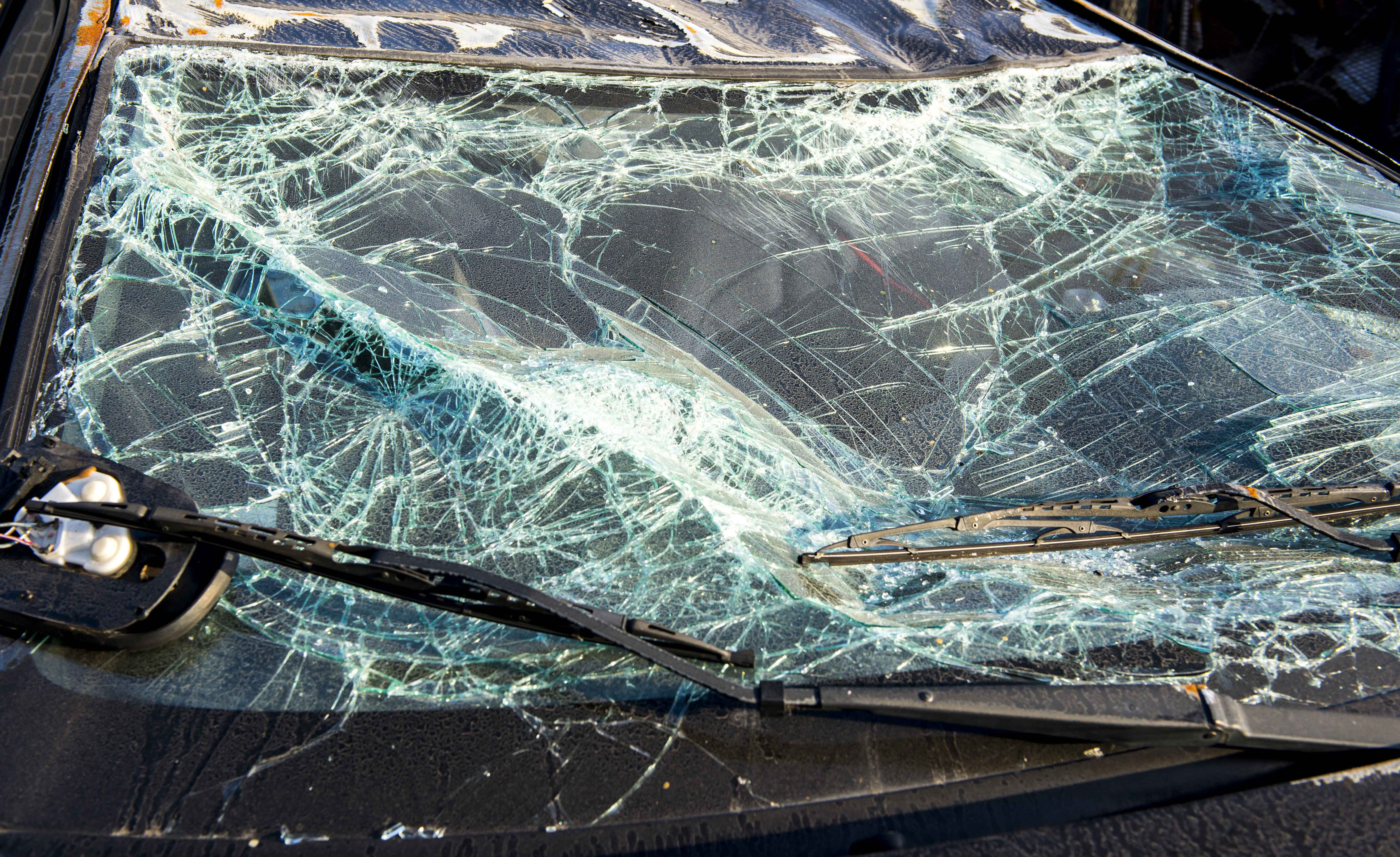
The date 1-23-15 was written on the windshield, along with 30 DAY. This was a marking from a tow company after the vehicle had been taken to the yard.

This guy had his vehicle impounded for 30 days on January 23rd, for driving while unlicensed. He hadn’t even bothered to erase the markings from his windshield.

If he can’t erase the tow company markings, what makes you think he even cares about what kind of damage or harm he does with his car? The proof was right there in the street because both cars were towed.

During the interview he told me he had been living illegally in California  and didn’t have a license. I asked him why he hadn’t gone to the DMV because they were handling out driver’s licenses to everybody since the beginning of January.

His answer should get you upset if you’re following all the rules and have car insurance.

He just hadn’t gone yet. He hadn’t even made the effort to go to the DMV, despite the fact that they’re handling out licenses to everyone like candy.

When he found out his car was being impounded again he asked if he could have a chance. I told him no way. He then asked, “Can you just have the tow truck put the car in my backyard?” NO!

This article isn’t a debate if they should get licenses or not. That’s for someone else to decide. I’m just telling a story about what happens almost nightly where I work.

In California, everyone has the ability to get a driver’s license no matter what country they’re from or what their citizenship is. That’s fine, but when a person hasn’t even made the effort to go to the DMV then it’s beyond lazy and I have no sympathy.

Unfortunately they’re out there on the roads with the rest of us. Stay safe out there.