
Why is the street shut down for so long?

_DSC6365

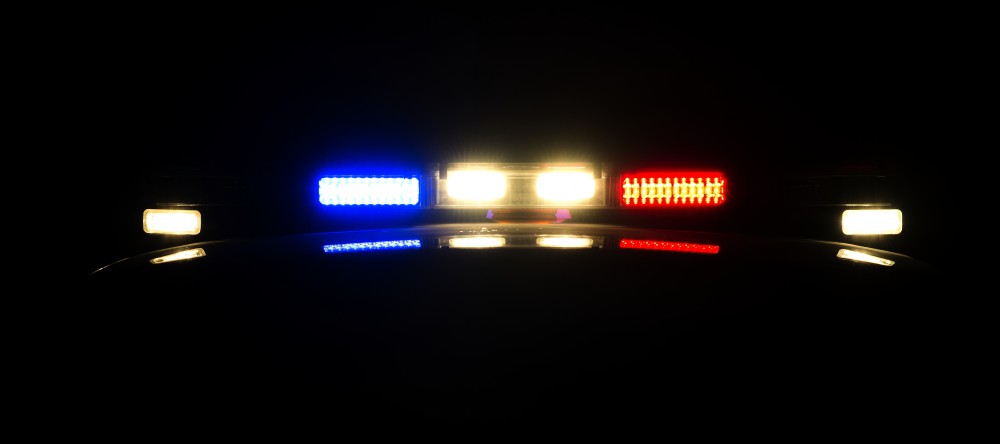
Have you ever driven by a big collision scene and wondered why it was taking the cops so long to open up the street?

Have you ever wondered why it looked like the cops were standing around doing nothing when you were getting detoured?

No one wants be inconvenienced by a road closure when the police shut the street down because of a car accident or a crime scene. Believe me, I don’t want to be there any longer than I have to. I just want to finish my call and move on to the next one.

When the street does get shut down, it’s for good reasons. We don’t want to impact the public any more than we have to. Here are a few reasons why the street gets shut down at a collision scene.

1. Sometimes it’s just safer for everyone involved to have it shut down. The firefighters and ambulance personnel need room to work and they don’t want to worry about cars zooming by. Firefighters hate dodging cars just like we do.

2. Sometimes it makes cleanup easier for the street to be shut down. This is usually temporary.

3. Sometimes we shut the street down because we’re waiting for word from the hospital on the condition of the victim. No emergency room doctor is going to tell you anything in five minutes, so we have to wait. If the injuries aren’t as bad as we first thought then we open it up and get out of there.

4. Sometimes the street is closed down because it was a fatal collision. Closing the street down is just a necessary evil. If it’s after business hours, a traffic investigator or detective might have to be called out from home. This alone could mean an extra half 30-60 minutes to the street closure.

This might be why you see a bunch of cops standing around doing nothing. They might be in standby mode waiting for the detective.

5. Sometimes we stand on the side and look like we’re doing nothing because the forensic person wants us out of the scene so they can take their pictures.

6. Sometimes the fire trucks are in the way. I can’t set up for measurements until they leave the scene. If I setup too soon, there’s a chance the fire trucks will run something over when they leave.

When it comes to investigating a major injury traffic collision there are certain things we have to do. That means we have to measure the location of all the skid marks, gouge marks, fluid trails, areas of impact and points of rest.

There’s no getting around this part. After the investigation is done in the street, the traffic accident scene can be recreated in a scale drawing for the report.

The street could be closed down anywhere from 1 to 3 hours depending on how involved the scene was. It could also be longer.

Remember, we understand everyone wants to know how to get around the closure, but it’s impossible for us to answer every question when we’re standing in the middle of the street.

You’re just holding up traffic if you stop. You might have to keep going and figure it out.

It’s 2015 people. Invest in a map. Or just pull over and look at  Google Maps on your phone. It’s not that hard.

Thank you to the officers in Baltimore

_DSC8694

I sat in front of my TV and watched the Baltimore riots and felt pissed. I felt anger for what they were doing and I felt sorry for the cops standing in the skirmish line.

How can anyone set fires like that and think it’s OK? How can someone go into the street and destroy property like that? How can someone cut a fire hose or throw rocks at a fire truck?

As the rioters threw rocks and bottles it reminded me of a scene from the Middle East in the 1980s.

But it wasn’t the Middle East.  It was about 40 miles from the White House in the United States of America. That’s not supposed to happen here.

As I watched, I also felt anger for what the cops were going through. I watched them in the skirmish line with their helmets, shields and batons and I sympathized with them. That easily could’ve been me and my friends working the line.

They didn’t ask to be there. They didn’t have anything to do with what the protest was about. They were just stuck there doing a job that anyone of us could’ve been stuck doing.

I watched as rocks and other objects were thrown at them and I was pissed. I was even more pissed when a guy walked up to the skirmish line with a trash can that was on fire and threw it at them.

It made me more frustrated to watch as the skirmish line stood there and didn’t advance to take the rock throwers into custody.

From the news reports, it appeared the officers had their hands tied behind their backs by the higher ups. Shame on the command staff for letting that happen.

Tonight was my first day back to work since my days off. Thankfully everything was normal in my city. Citizens waved and said hi. People said thank you when I was finished with my calls. One guy on a bicycle even told me he was sorry  I had to come out after he was hit by a car. That was far different from what was going on 3,000 miles away.

Tonight’s shift made me feel grateful for where I worked. It also made me think of the men and women in Baltimore that weren’t so lucky the last few nights. My helmet was in the truck of my patrol car while other cops had all of their gear on in a hostile environment.

The last few night most people watched TV and only saw officers in helmets. I bet most never thought of the face, behind the plastic shield.

Under each helmet was a person. A real human being with feelings and emotions. They were husbands, wives, fathers, mothers, sons and daughters who just happened to be cops.

Try to imagine what it was like to be in their shoes during the last few days. Hopefully you can sympathize with what they went through. It’s not an easy job, but someone has to do it.

Thank you to all the officers in Baltimore.

A lot of us prayed for you while you were working in hell. Stay safe out there and keep those shields up.

Body Worn Camera

IMG_0614(1)

 Say Cheese

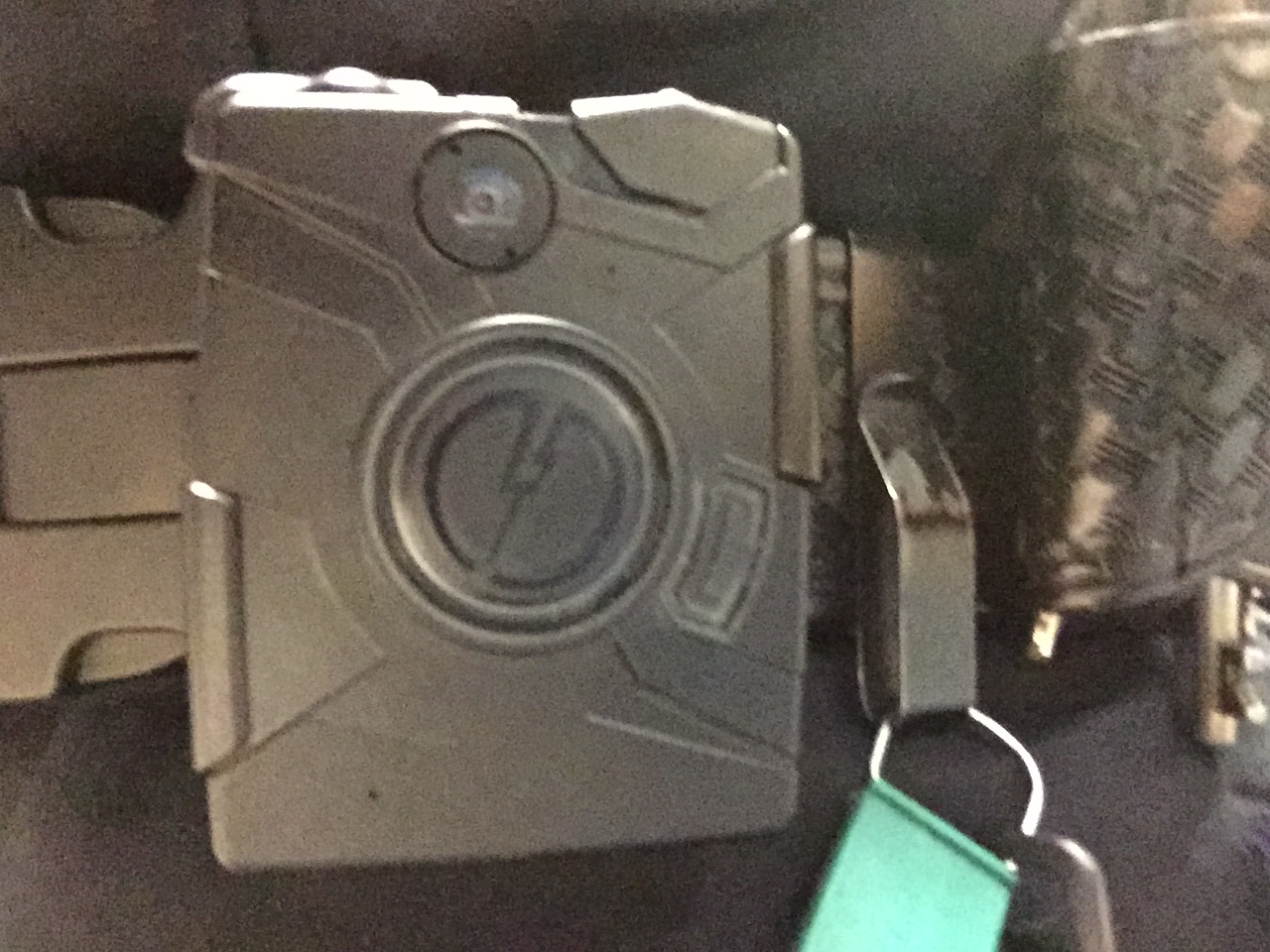
This weekend was the first time I ever used my Taser body worn camera (BWC). It was an easy transition from the Puma audio recorder we were issued a few years ago. Like anything new, you just have to get used to turning it on and off.

I don’t see the BWC as a bad thing. It’s a good thing that was needed in today’s volatile climate. If the BWC shows a suspect is guilty and keeps me out of court then it’s a good thing. If a person lies about something and the camera was running, then it did its job.

Is the BWC the end all when it comes to investigations?

The BWC shows a lot, but it can’t replace the good old human eye, head and neck. The head can turn to look. The BWC can’t. Its field of view is dependent on where the officer wears it.

As an officer, you’re trained to keep you gun side back. That means standing at an angle to a suspect with the gun away. Since my BWC is on my belt that means its field of view might be turned slightly away from the suspect.

I bring that up because a non-law enforcement person might wonder why the video didn’t show everything they expected to see. There’s just no perfect place to wear it.

When I entered the Orange County Sheriff’s Academy in 1994 I never imagined wearing a camera while working. It wasn’t  something you thought about. As the years went by, new technology changed how we did things. Equipment got faster, smaller and smarter.

The BWC age is upon us, so you might as well embrace it because it’s not going away. If you don’t have a BWC yet, you will soon.

There’s an interesting feature about the camera when the power switch is on. It’s always recording the last 30 seconds with no audio. When you activate the camera to the record mode  the audio then starts. The BWC retains the last 30 seconds of video prior to the record button being activated.

So, this brings me to an interesting thing about the BWC. I’m not worried the BWC is going to show me doing something wrong.

The main thing you have to worry about with the BWC is to make sure the power is off when you go to the rest room….

I didn’t think about it until the first time nature called and I had this new piece of technology attached to the front of my belt.

Let me say that again. “Attached to the front of my belt.”

It’s just a little something the newbies to the world of law enforcement cameras should think about. It brings new meaning to being caught with your pants down….

The age of the body worn camera is upon us. Say Cheese.

Stop Making Us Look Bad

IMG_0270

Stop making us look bad.

Yesterday I watched a video that left me shocked and disgusted. I was at work and couldn’t give it my full attention. I decided to watch it again when I had more time. After watching it the second time I was mad.

I was mad at the officers for what they did. I was mad how they made us look bad. I was mad that anyone could be that stupid.

This isn’t the only video that has bothered me in the last week. This isn’t the only story that I have read that has bothered me either.

One particular story is from South Carolina. We all know that one. The other was from the Mid-West where some cops were arrested for drug sales. Who does that?

Then there was this Deputy Chief in California, who was arrested for federal drug charges last month. You just don’t become the subject of a year-long FBI and ATF investigation without some serious red flags pointing toward you.

How can someone, who earned the honor to wear the badge, be involved in drug sales?

How can someone cross the line in the sand we all swore to protect and guard? The line is clear and straight. There is no gray area. It’s either right or wrong dumbass. You’re either breaking the law or not.

There are over 320 million people in the United States and only 800,000 police officers. That’s a very small percentage of people that hold the line between good and evil. It’s also the line between right and wrong.

I have a message for you if you’re going to make us look bad. GET OUT. We don’t need you. The job is hard enough without you doing something stupid.

Go find another job. I worked too hard to have you tarnish my badge. Other people have worked too hard and gone through too much for you to make them look bad.

I’m proud to be an officer. It’s the greatest job in the world and there are a lot of us who feel the same way.

Every day and night officers go out and do the right thing. Every day and night there is temptation, but they walk past it because they have integrity. Every day and night they make the right decisions because that’s who they are.

They leave it all out on the playing field when their shift is over. They then come back tomorrow and do it all over again. They do their best because that’s what the badge requires. That’s what the public expects and that’s what we, as officers, expect.

If you’re that one bad apple, leave now. Leave before you dishonor the rest of us.

There’s this talk about a brotherhood and a family of officers. If you’re going to act like a thug, I don’t want you in my family. If you act like a criminal then you’re dead in my eyes. You don’t deserve the honor of wearing the badge.

The door is over there. Don’t let it hit you on the way out.

It all goes back to having integrity. Either you have it or you don’t. There’s no in between here. It’s like being pregnant. Either you’re pregnant or you’re not. There’s no such thing as being “kind of pregnant.”

You’re either part of the problem or part of the solution.

Rest in Peace Call Sign 784

IMG_0600

My call sign on the radio has been 784 for the last 15 years. In fact, I’ve had the call sign 784 longer than I have been married.

The number 784 and my last name kind of go together. Almost like a math equation.

784=Roman

You remember the old rule in math? One side of the equation has to be equal to the other side. The equation could also be flipped around and it would have the same meaning like this.

Roman=784

Ask anyone in patrol and they knew the number because I’ve had it so long. If I call dispatch on the phone I don’t have to say my name. I just tell them 784 and they know it’s me.

I think my wife should call me 784 sometimes. 784 would be the normal voice. John would mean I was in trouble.

I always thought I could retire as 784 and ride off into the sunset with those three numbers. It a few weeks my number is going to change because of a reorganization of call signs throughout the department.

One sergeant asked me if there was going to be a retirement party for my number. Here are a few other comments I’ve heard from people:

“Why?”
“That’s dumb.”
“WTF?”
“I’m still going to call you 784 on the radio.”
“Why are they changing your number?”

And finally one dispatcher sent me a message that simply said, “You’ll always be 784.”

IMG_0601
A few people asked me if I had a tattoo of 784. I told them I didn’t, but the bottom of my pool had 784 in tile (not really).

I know 784 is just a set of numbers, but ask any cop about a call sign they had for years and they’ll tell you the same thing. They’ll say the number was part of them.

If they worked a patrol area for a long time, they probably had the same call sign. If they worked the same specialized detail for a long time, they had the same call sign. It could be 30 years later and they’ll still tell you what their call sign was.

Two weeks from now the phrase, “784 en route,” will be a memory. It will be like a name in written in the sand that got washed away by a wave. Each wave after that erasing it away forever.

My new number will be 729….It just doesn’t sound right.

It will take a while to reprogram myself, but I’ll just have to adjust. It won’t be any different than wearing a new pair of boots at work. At first there will be some pain, but then you get used to them.

One thing is for sure. I’ll feel dirty the first couple of times I say 729. . It will certainly feel like I’m cheating on the number 784.

I might just have to say, “784” every once in a while just to keep the number alive.

So long number 784. We’ve been through a lot together.

What is Bravery and Courage?

raiderslogoLG

Look up the words Bravery and Courage and you’ll find the following:

Bravery is, “a quality of spirit that enables you to face danger or pain without showing fear.”

Courage is, “mental or moral strength to venture, persevere, and withstand danger, fear, or difficulty”

How many people know about the Doolittle Raid that took place on April 18, 1942? This month will be 73 years since the historic raid, but very few people will talk about it.

The raid was significant and amazing because of what the pilots and crews did. On that date, sixteen B-25 bombers with five-man crews launched from an aircraft carrier and headed toward their targets in Japan.

Launching a bomber off an aircraft carrier had never been done before by any of the pilots until that day. They had no fighter support and they weren’t coming back to the aircraft carrier either. This was a one-way trip. The plan was for them to land at bases in China.

While en route, the American task force of ships was spotted by a Japanese boat, which radioed an attack warning. That ship was sunk and it was decided by Lieutenant Colonel Doolittle to launch the mission early.

The mission was launched 10 hours earlier and 170 nautical miles farther away from Japan than was planned. The bombers arrived about six hours later and hit their targets.

After dropping their bombs on Japan, the planes headed for China. As they got closer they knew they weren’t going to make the landing strips because of low fuel levels.

One plane landed in the Soviet Union. The other fifteen planes either crash landed or were ditched when their fuel ran out thirteen hours after launching off the USS Hornet.

What happened to them after that?

One was killed during bail-out. Two drowned off the China coast, three were executed by Japanese firing squad and one died of sickness and malnutrition in captivity.

The survivors had to avoid Japanese detection and were helped to safety by the local Chinese.

The mission was seen as a morale booster to the country after the Pearl Harbor attack.

Before the mission, the Japanese didn’t think this type of attack was possible. The Doolittle Raid showed them different.

This story brings me back to the words Bravery and Courage. Everyone knows the words, but do we really understand what they mean?

Just look at what those eighty men did 73 years ago and you have the true meaning of the words.

They also showed all of us what guts and hard work are too.

So, when times get tough, we can all learn something from the Doolittle Raiders.

Stay safe.

Peer Support Quotes

IMG_0370(1)

When I started writing the Peer Support blog story, I had intentions of doing a follow up with quotes from other officers. The question I posed to them was, “What does peer support mean to you?”

Below are a few quotes from people who are part of Peer Support at my department.

“In law enforcement we sometimes put up emotional walls to deal with the stresses of our job. Peer support should make you realize you’re not alone behind those walls.”

“Peer support is a resource for emotional survival throughout your career in law enforcement. Someone that’s there to turn to for assistance with the difficulties we deal with at work and home.”

“Peer support to me is the equivalent to working out and eating right to keep a healthy body. We need to do the same and keep a healthy mind and soul.”

“Peer support is the one program specifically designed to take care of the emotional wellbeing of law enforcement. To me…it’s giving the strong and stoic permission to be human. Ultimately protecting our resilient warriors.”

Just a little something to think about in this crazy world we call police work.

Stay safe.

What is Peer Support in Law Enforcement?

_DSC2302

What does Peer support mean in law enforcement?

A few years ago there were flyers at the police department about this thing called “Peer Support.” I didn’t know exactly what Peer Support was at the time, but it sounded silly.

“There’s no crying in police work,” was all I could think of. It wasn’t much different from the movie A League of Their Own, where the manager said, ‘There’s no crying in baseball.’

One night I handled a triple fatal collision involving three pedestrians. The victim’s family was there and it was one of the most gruesome scenes I ever saw. It was certainly shocking to see, but I felt fine afterward.

A few days later an email was sent out inviting the people involved on the call to come and talk as a group for a debriefing.

An officer asked me if I was going. I gave him a skeptical look as I said, “I’m okay. I don’t need to go to that.” I wasn’t going to sit in a room with a bunch of people and talk about this.

I walked by the briefing room and looked through a window in the door. There were people sitting in chairs that were set up in a circle.

I knew it! It was going to be a Kumbaya session where everybody held hands and hugged each other. They were probably going to sing songs and light candles too.

That wasn’t for me. I’m a cop. I’m a finger pointer, not a thumb sucker.

About two years later I handled a drowning call that affected me afterward because I was a participant this time instead of being an observer . I described it as being in a funk. Later that night the watch commander caught up with me before I went home.

She asked me about the call and we talked about it for a long time in the hallway. She listened to my story and told me about a drowning call she handled years before. She had the same feelings at the time that I had now.

A weight was lifted off my shoulders after our talk. I left work feeling refreshed. I had known her for years and I considered her a friend so it made it easy to talk with her about what happened.

The next night I spoke to another officer, who was the best man in my wedding. We talked about my call and about some of his difficult calls too.

In the end it was just friends talking about something traumatic that occurred on the job. In this case, it let me get the emotional baggage off my chest and move on.

That was when I got it. I understood what Peer Support meant. That was the incident where I drank the Peer Support Kool Aid.

Since then I’ve spoken to numerous officers who are on the Peer Support team about what they do and what resources they provide to other officers. Listening isn’t their only function. They’re a group of people who want to help any way they can.

I learned Peer Support wasn’t about hugging and lighting candles. It was about listening.

Clarke Paris of The Pain Behind the Badge calls it a “Cop Stew.” His example is of a pot on the stove set to a low fire. Throughout our careers we put things into the pot. Eventually some of that stew should be removed from the pot. If not, sooner or later that cop stew will boil over.

I highly recommend his seminar if you get a chance to see him speak. You’ll walk out with a different perspective.

Two weeks ago I had dinner with a sergeant on Peer Support to discuss this article and some blog posts ideas I had. His message to people was this: “If you don’t talk to me, talk to someone.”

It’s as simple as that.

So, what is Peer Support in law enforcement? Here’s my simple example.

Peer Support is like changing your car’s oil every 5,000 miles. If you skip enough oil changes your car is going to give you problems. Perhaps one day that car is going to leave you stranded.

Have you changed your oil lately?

What is Delaying and Obstructing?

IMG_0270

California Penal Code Section 148
148. (a) (1) Every person who willfully resists, delays, or
obstructs any public officer, peace officer, or an emergency medical
technician, as defined in Division 2.5 (commencing with Section 1797)
of the Health and Safety Code, in the discharge or attempt to
discharge any duty of his or her office or employment, when no other
punishment is prescribed, shall be punished by a fine not exceeding
one thousand dollars ($1,000), or by imprisonment in a county jail
not to exceed one year, or by both that fine and imprisonment.

V C Section 2800 Compliance with Peace Officer Orders
2800. (a) It is unlawful to willfully fail or refuse to comply with a lawful order, signal, or direction of a peace officer, as defined in Chapter 4.5 (commencing with Section 830) of Title 3 of Part 2 of the Penal Code, when that peace officer is in uniform and is performing duties pursuant to any of the provisions of this code, or to refuse to submit to a lawful inspection pursuant to this code.

I hardly ever watch videos on Facebook that are police related. That’s because of the ignorance of those involved in lot of the videos. It just plain frustrates me when I see some knucklehead acting dumb on a video claiming to know what he’s talking about.

It then frustrates me even more to know there are people watching the same video, who are getting the wrong information because they’re also misinformed.

So, like I said, I usually skip videos all together because I have better things to do on the phone, like playing a game.

Well, today I didn’t follow my own advice and I watched one. I knew I should’ve just moved on to something else, but for some reason I clicked on it. The video showed a guy, who was clearly being difficult on purpose during a car stop.

During the video the officer said he was “giving a lawful order,” which of course, the suspect didn’t comply with. This went on for quite some time before he was taken into custody.

It got me wondering if people knew it was against the law to disobey “a lawful order.”

I also wondered how many people knew it was against the law to delay, obstruct or resist an officer.

Now, let me start by saying most people at work are law abiding citizens, who comply with my directions and request the first time I ask. I hardly ever have to ask twice because most people understand I’m in the middle of an investigation and they’re in the way.

So, this brings me to the two laws I copied and pasted at the top.

Let’s look at 148a of the California Penal Code first. “Every person who willfully resists, delays, or obstructs any public officer, peace officer.”

Now, most people aren’t going to fight with the cops because they know they’re going to jail afterward. Everyone knows fighting or running from the cops falls under the “RESIST” part of the law.

How about the delaying or obstructing part of 148aPC?

There’s misinformation out there or ignorance as to what delaying or obstructing is. If I can’t do my job like the other 99.9% of the time because you’re in the way or causing me to get distracted from what I’m doing, then you fall in the delaying and obstructing category.

If I tell you to do something over and over again, but you refuse, then you fall into the delaying and obstructing category also.

All that has to be proven in court is a person was willfully doing it. In other words, you’re doing it on purpose after I told you to stop or to move.

It amazes me to see the hurt and upset looks I get when I have to change the tone in my voice because someone didn’t get it the first couple of times. They look at me like I did something wrong.

The reality is I want to finish my call and move on to the next with as little conflict as possible. It’s just easier that way for everyone. Why would I want to be there any longer than I had to if there were going to be problems?

Let’s also look at 2800(a) of the California Vehicle Code.

It is unlawful to willfully fail or refuse to comply with a lawful order, signal, or direction of a peace officer…..

This seems pretty simple too.

If an officer asks you to do something and you don’t do it, then he or she is going to tell you to do it. At that point it’s an order. If you hear the words, “I’m giving you a lawful order,” then you’re about to go to jail. Anything other than complying is being done on purpose because you’ve already been put on notice.

When you look at it this way it should be pretty simple. Just let the officer do his or her job and listen to the instructions.

If the officer stops you while you’re driving and asks for your license, then guess what? You need to give up your license on the first request. Not after ten times. Any normal and reasonable person can see that this is delaying and obstructing. Especially if the officer is standing in traffic at the driver’s door.

I could go on and on with examples, but it’s a pretty simple rule to follow.

So, the next time you watch a video on Facebook and you hear the officer tell someone to do something ten times, then you know that person is breaking the law by delaying or obstructing. That person had control of their destiny by listening and following the directions the first time, but they refused to.

There’s no way a person can say, “The cops grabbed him for no reason,” or “He didn’t do anything wrong.” Yes they did.

We don’t want to fight or argue with you. We just want to get the call done and move on to the next one to help someone else.

This isn’t rocket science. It’s common sense.

Why do I do this job?

flag

Why do I do this job?
Why should I care if nobody else does?

A month ago these were the questions I asked myself after watching the civil unrest unfold in the Mid-West. I was shocked at the venom that was spewed by people. I was outraged by the negativity.

I wondered if it mattered anymore.

I then started reading the comments on social media and news stories. Some comments were ignorant and downright mean. The comments were from people, who have no idea what we do.

I started to wonder how much effort I was going to give at work. I felt like no one supported us and nobody cared. I started to wonder if anything I did as an officer mattered.

I started to wonder if any of this was worth it.

Why should I go risk my neck for people who don’t care? Why should I go that extra mile for strangers, who hated me?

I went back to work a few days after the civil unrest began. I was wondering how people were going to treat me.

I went on my first call and the people were nice to me. Then it happened again on the next call. And again after that. And again.

People were respectful and were happy I was there. They said thank you. They smiled. They told me to have a safe night. They said they appreciated what we do.” I started hearing it more than ever. Other officers told me they noticed the same thing.

I noticed there was actual support for us. I saw that people appreciated we were out there. All of this showed me there was a reason to still do my best for these people.

This past weekend, I witnessed the number one reason why we shouldn’t give up on the citizens we serve.

One incident was on Friday and the other was on Saturday night (the “You’re not the enemy” story).

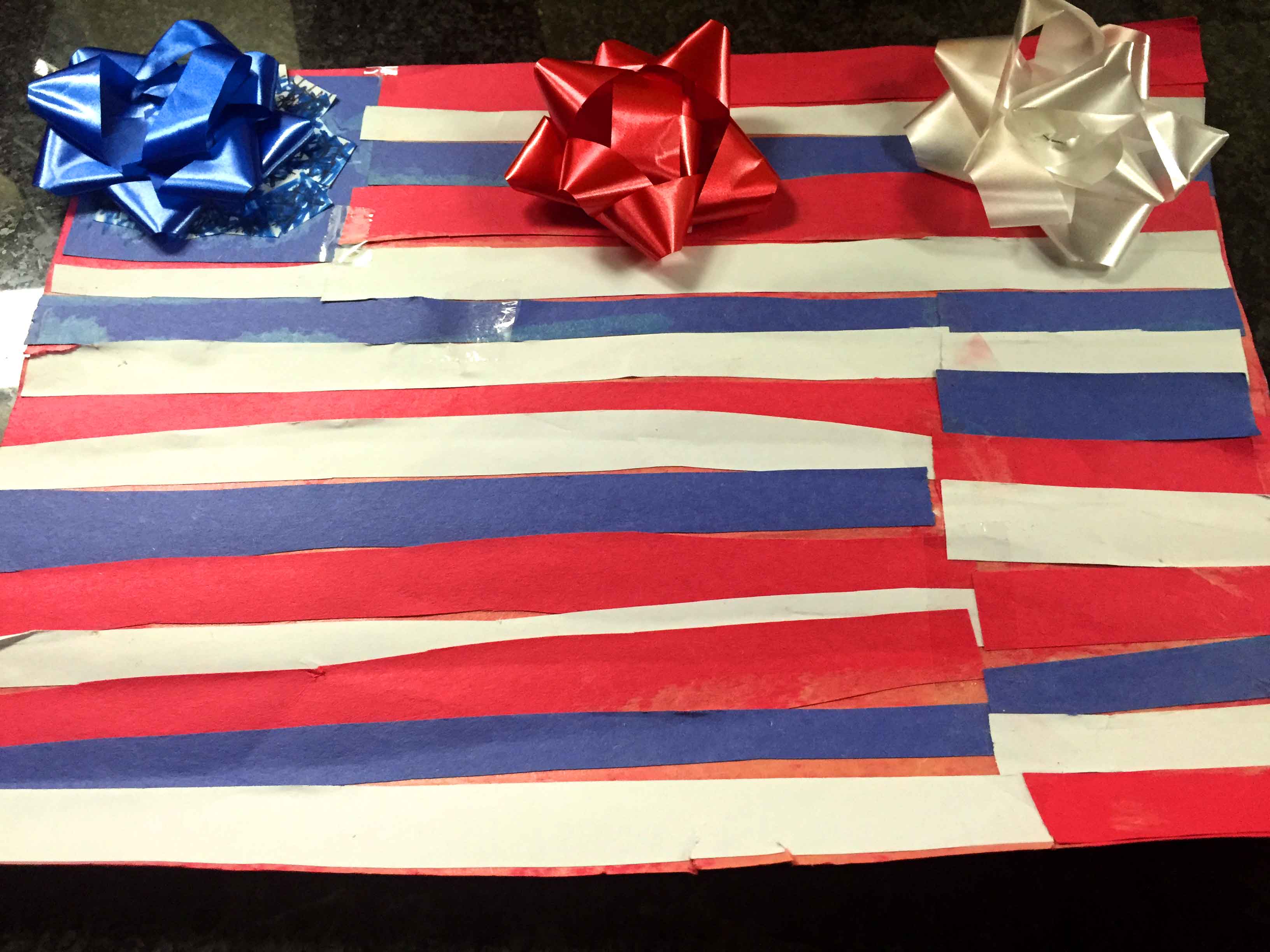
On Friday night, a nine year old girl named Lilly handed two officers something that was wrapped in Christmas paper.

They opened it up and saw a United States flag she had made. Lilly told them she made the flag for the officers who had been killed in New York.

This nine year old girl did this for officers she didn’t know. She did this for strangers who wore a badge. It was important to her.

There was something about her gesture that was important to me. Her gesture should be important to everyone. It confirmed there was still good in the world and people cared.

This child hadn’t given up on us. That meant her parents hadn’t given up on us either.

This story about Lilly and the flag should matter to all officers. It should also matter to the citizens who support their police officers.

That paper flag is a symbol why we do this job and why it still matters.

And why do I still do this job?

I do this job because you haven’t given up on me.

Be safe